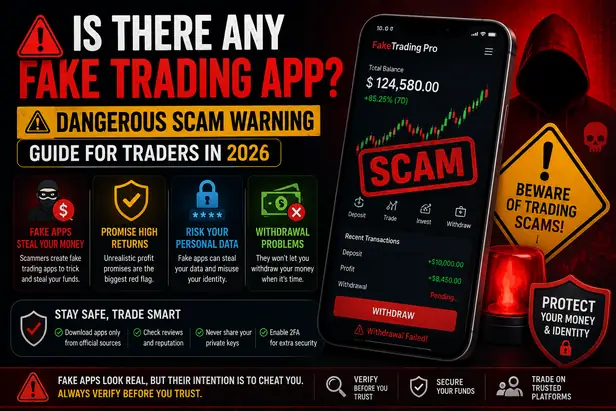
Is There Any Fake Trading App? Ultimate 2026 Scam Warning Guide
Is there any fake trading app? Yes. Fake trading apps are used in investment scams, and some look convincing. Regulators warn that scammers use ads, social media, fake testimonials, and cloned company information to appear genuine.
Is There Any Fake Trading App?
Yes. A fake trading app may claim to offer crypto, forex, stocks, CFDs, futures, AI trading, or automated strategies. It may display an increasing balance even when no investment is taking place.
What Is a Fake Trading App?
A fake trading app misrepresents its company or handling of user funds. Examples include fake platforms, impersonation apps, clone firms, and fake AI platforms promising automated profits.
The FCA warns that clone firms can copy genuine firms’ information while using different contact details.
How Do Fake Trading Apps Work?
A scam may follow this pattern:
- Advertisement: An offer promises fast profits or a limited opportunity.
- Contact: You are directed to an app or website.
- Deposit: You start with a small amount.
- Fake results: The dashboard shows profits or account growth.
- More deposits: You are encouraged to add money.
- Withdrawal problem: New fees or verification payments appear.
10 Warning Signs of a Fake Trading App
- Guaranteed profits: High returns with little risk are a warning sign.
- Pressure: Urgent deposit requests are a reason to slow down.
- No company details: You cannot verify the legal company or registration.
- Fake regulation: A logo appears without verifiable authorization.
- Suspicious reviews: Testimonials or profit screenshots may be fabricated.
- Withdrawal fees: Unexpected “unlock” or verification payments are concerning.
- Unsolicited messages: Unexpected investment offers deserve extra scrutiny.
- Celebrity endorsements: A celebrity image does not prove legitimacy.
- Profit-heavy marketing: Risks and losses receive little explanation.
- Repeated money requests: More deposits are demanded while withdrawals remain unavailable.
How Can You Check a Trading App?
Start with the company, not the app design. Find its official website and compare the company name, app publisher, contact details, and terms.
If it claims to be regulated, verify that through the relevant regulator. In the U.S., Investor.gov provides verification tools; in the UK, the FCA provides its Firm Checker and Warning List.
Search the company name with “scam,” “fraud,” or “complaint.” The FTC recommends independent research.
What If You Already Deposited Money?
If you suspect a fake trading app, stop sending additional funds until you verify the situation. Save screenshots, transaction records, wallet addresses, emails, chats, and website details.
Contact your bank, card issuer, or payment provider promptly if applicable, and report suspected fraud. Be careful with recovery services demanding upfront payment.
Are Fake Crypto Trading Apps Common?
Crypto apps are not automatically fake, but scammers use cryptocurrency investment schemes. Because crypto transfers can be difficult to reverse, verify the platform and recipient before sending funds.
FAQ
Is there any fake trading app?
Yes. Fake apps can imitate legitimate platforms, display fabricated profits, and encourage larger deposits.
How can I tell if a trading app is fake?
Verify the company, regulatory status, app publisher, contact information, and reputation.
Can fake trading apps show fake profits?
Yes. Scam platforms can display fictional balances or investment growth.
What if an app asks for money before withdrawal?
Do not automatically pay. Verify the platform and reason for the charge independently.
Can scammers copy a legitimate trading company’s name?
Yes. Clone firms can copy genuine company information and use different contact details.
Conclusion
Is there any fake trading app? Yes. Some fraudulent platforms are convincing enough to look legitimate, so appearance alone is unreliable.
Before depositing money, verify the company, regulatory claims, app publisher, withdrawal rules, and reputation. Avoid guaranteed-profit promises and pressure tactics. If you suspect fraud, stop sending money, preserve evidence, and contact the appropriate financial institution or authority.
A trading app should be trusted because its identity and claims can be independently verified—not because its dashboard looks credible.