


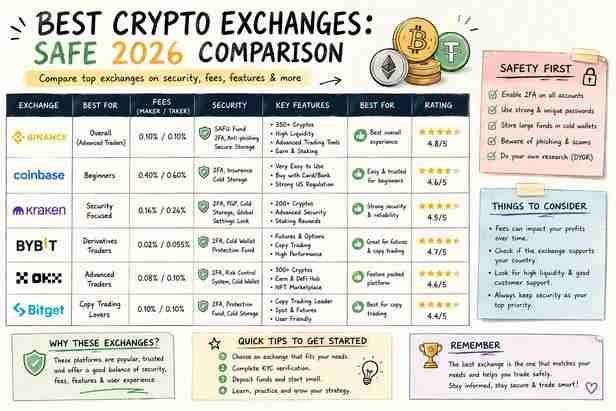
Choosing between cryptocurrency exchanges can be difficult when platforms advertise low fees, large coin selections, advanced tools, and strong security. The right platform depends on what you actually need.
Before opening an account, compare trading costs, security controls, liquidity, supported assets, funding methods, available features, and regional availability. These factors can have a bigger impact on your experience than promotional claims.
What Are Cryptocurrency Exchanges?
Cryptocurrency exchanges are online platforms where users can buy, sell, and trade digital assets such as Bitcoin and Ethereum.
Two common models are centralized exchanges (CEXs) and decentralized exchanges (DEXs). Centralized platforms operate through a company and commonly provide account-based trading, fiat funding, mobile apps, customer support, and security tools. Examples include Coinbase, Kraken, Binance, OKX, and Crypto.com.
Decentralized exchanges use blockchain-based smart contracts rather than the same centralized custody model. They can provide greater wallet control but may require more technical knowledge and introduce smart-contract and transaction risks.
How to Compare Cryptocurrency Exchanges
Fees
Look beyond the advertised trading commission. Potential costs include maker and taker fees, spreads, deposits, withdrawals, network charges, and currency conversion.
A platform with a low headline fee may still cost more if its spread or withdrawal charges are higher. Always check the current fee schedule for the product and transaction you plan to use.
Security
Useful protections include two-factor authentication, passkeys or security keys, withdrawal controls, address allowlisting, account notifications, and transparent security information.
Proof-of-reserves reporting can provide additional information about an exchange’s assets, but it should not be treated as a guarantee against every financial, operational, or security risk.
Supported Assets and Liquidity
Check whether the platform supports the exact cryptocurrencies and trading pairs you need. A large coin list is not automatically an advantage if your preferred market has limited liquidity.
Liquidity matters because thin markets can make larger orders more difficult to execute without affecting the price.
Funding and Withdrawals
Review supported fiat currencies, bank transfers, cards, withdrawal methods, minimums, processing times, and available blockchain networks. Services can differ substantially by country, so confirm availability before depositing funds.
Cryptocurrency Exchanges for Different Needs
Coinbase: Its straightforward interface and educational material can appeal to newcomers. Check the current pricing for your intended transaction because fees vary by service.
Kraken: Its educational resources, security information, and range of trading tools may suit users who want a platform they can explore as their experience develops.
Binance: Its broad selection of markets and trading functionality can appeal to active traders, although available products and services vary by jurisdiction.
OKX: Its advanced trading features may interest experienced users comparing markets, products, and trading costs.
Pionex: Its built-in trading bots make it relevant to users specifically interested in exchange-based automation rather than connecting a separate bot platform.
These descriptions are use-case comparisons, not a universal ranking. Your location, experience, preferred assets, and intended products should determine which platform deserves further consideration.
Are Cryptocurrency Exchanges Safe?
No exchange should be treated as completely risk-free. Platforms can experience outages, cybersecurity incidents, operational problems, regulatory changes, or restrictions affecting particular users.
You can reduce some account-level risks by using a unique password, enabling strong two-factor authentication, protecting recovery information, checking withdrawal settings, and avoiding suspicious links.
You should also understand custody. With a centralized platform, the exchange commonly controls the private keys associated with assets held on the platform. Self-custody through a personal wallet involves different responsibilities and risks.
Common Mistakes to Avoid
Do not choose an exchange solely because it advertises the lowest fee or supports thousands of coins. Check the complete cost, liquidity, security features, and availability in your country.
Also avoid assuming that a familiar brand eliminates market risk. Cryptocurrency prices can move sharply regardless of how established an exchange is.
If you are interested in automated trading, you can also read our guide to MT5 bot trading to understand how Expert Advisors work.
Conclusion
The most useful way to compare cryptocurrency exchanges in 2026 is to examine the complete service rather than one advertised feature. Fees, security, liquidity, assets, funding methods, tools, and regional availability all matter.
Coinbase, Kraken, Binance, OKX, and Pionex offer different combinations of features, so there is no universal choice for every trader. Verify current terms, fees, and availability directly with the provider before depositing funds.
Cryptocurrency trading involves significant risk, and this article is for informational purposes only, not financial advice.